









October 20, 2024
IPv4MAll: The Best IPv4 Broker for Your IP Address Needs
In today’s digital landscape, securing reliable IP addresses is crucial for businesses to thrive online. With the scarcity of IPv4 addresses, partnering with a trusted IP broker becomes essential. This is where IPv4MAll shines as a leading IPv4 broker, offering unparalleled experience and comprehensive services to meet your IP address needs. Understanding the Role of IPv4 Brokers The demand for IPv4 addresses continues to grow, even as IPv6 adoption progresses. IPv4 brokers act as intermediaries, facilitating the buying, selling, and leasing of IP addresses between organizations. They navigate complex regulations, manage documentation, and ensure that transactions are secure and compliant. The Challenges in the IPv4 Market Due to the depletion of available IPv4 addresses, the market has become highly competitive[…]
September 24, 2024
Can IPv4 Addresses Be Tracked? A Full Guide
The Internet is a global system of interconnected computers that assimilate, transmit, and share large volumes of information. Each node in a networked system is given an IP (Internet Protocol) address that is instrumental in relaying messages between nodes. Out of all the IP addresses available, the IPv4 address is one of the most used and is still a very important component in the current internet. However, with the increase in consciousness about the privacy of our online activities, many people are more concerned with whether any one can track IP addresses. This article delves into the tracking of IPv4 addresses, explores the methods used, and discusses what this means for your online privacy. Understanding IPv4 Addresses IPv4 also known[…]
September 5, 2024
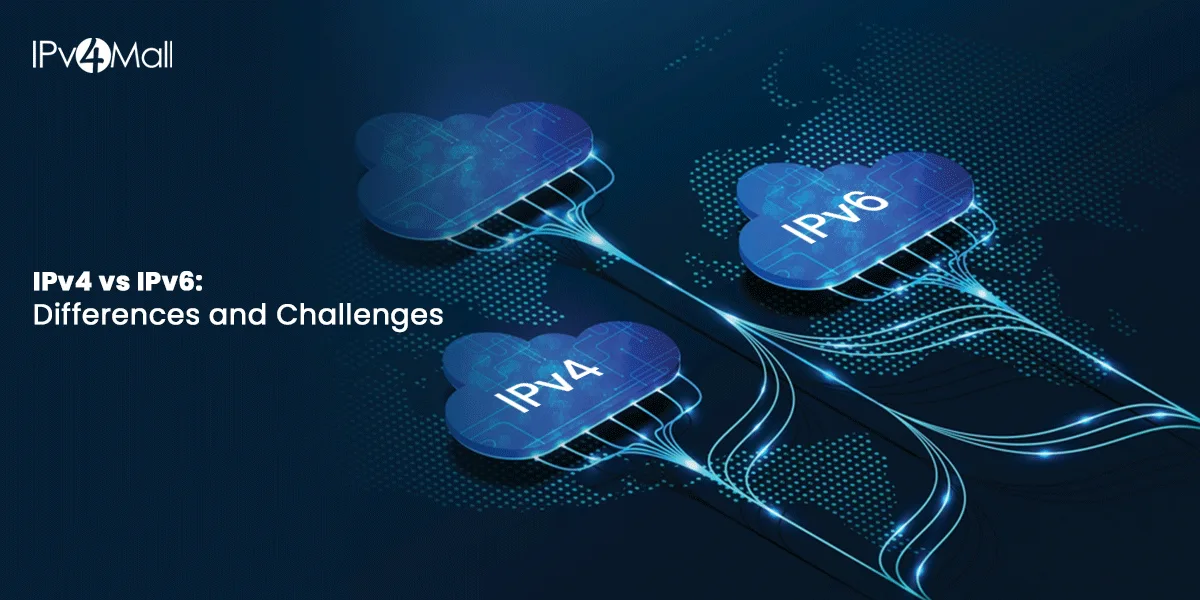
IPv4 vs IPv6: Differences and Challenges
In this modern age of technology and AI, the internet is used in pretty much everything, and the devices connected online are increasing dramatically. Each and every one of these devices needs a unique address to communicate with other devices. These addresses are called IP (Internet Protocol) addresses, and they are of two types so far: IPv4 and IPv6. This comprehensive article explores IPv4 vs IPv6 and the key differences between them. Let’s get right into it! What is IPv4 and IPv6? IPv4 IPv4 is the original addressing system introduced in the 1980s. It uses a 32-bit address scheme, which allows for approximately 4.3 billion unique addresses. You’d think 4.3 billion unique addresses is a lot—infinite even. However, over the[…]

January 25, 2022
IPV4 Heist: How To Prevent IPv4 Thefts?
IPv4 addresses are becoming more and more valuable daily. This is especially true as these addresses have been exhausted by the Regional Internet Registries. And also because, IPv6 has not been implemented properly. As Ipv4 is a commodity of incremental value, it is vulnerable to thefts. Moreover, as it is a virtual commodity, IPv4 thefts are on the rise. Existing IP addresses are not stolen, but IPv4 theft comprises the illegal allocation of available IP address pools. In addition, many scammers make use of dormant IPv4 addresses to launch spam attacks on unsuspecting users. The fifty million USD AFRINIC hack is a classic example of IPv4 theft. It also had a very negative impact on the complete IPv4 market. After[…]
November 12, 2021
IPv4 Transfer Process – How To Do It?
It is very difficult to acquire IPv4 addresses these days due to the depletion of IPv4 resources. In addition, the random distribution of the IPv4 addresses makes the transfer process much complicated. There are five regional internet registries, namely APNIC, LACNIC, AFRINIC, ARIN, and RIPE NCC. These internet registries control the IPv4 address management inside the geographical areas allocated to them. For example, ARIN is responsible for IPv4 allocations in the US, Canada and many Caribbean and Northern Atlantic islands. The availability of IPv4 addresses with the RIRs has depleted almost completely. However, some businesses still hold extra IPv4 addresses due to activities like mergers, acquisitions and the adoption of IPv6. Owning An IP Address For you to own an[…]

November 23, 2020
Understanding the Differences between TCP and IP
TCP (Transmission Control Protocol) forms a core standard of the Internet Protocol Suite that governs the communications across the internet and other computer networks. It operates at a much higher level when compared to IP (Internet Protocol), which is another principal communications standard. The major concerns of TCP remain the two ends that send and receive data packets, such as a web server and the browser on a user’s computer. TCP ensures optimal delivery of data packets to and from both ends to establish and maintain the connection. Apart from that, TCP also manages flow control, size of the data packets, the data exchange rate, as well as congestions in the network traffic. IP, on the other hand, maintains data[…]

November 10, 2020
What is Transmission Control Protocol (TCP)?
Transmission Control Protocol or TCP is a network standard that refers to how a network conversation can be established and maintained so that the connected applications and programs can share data. TCP and IP (Internet Protocol) work together to define how computers can send packets of data, forming the basic rules of data transfer over the internet. How Does Transmission Control Protocol (TCP) Work? TCP works based on a connection-oriented system, meaning that it establishes and maintains the connection until the applications have completed exchanging data at both ends. The TCP layer determines how the data is broken into packets to facilitate its transfer over the network, as well as sends and accepts data packets to and from the network[…]

October 18, 2019
Facts to Know About Internet Protocols
Internet protocols, abbreviated as IPs, enable computers to communicate with each other. When these communicate, data moves from one system to another one. Internet protocols also give these devices IP addresses to identify one another. Two types of internet protocols exist today, namely IPv4 and IPv6. When the internet began spreading quickly in the 1990’s, there were in excess of 4 billion IPv4 addresses. The sixth version of internet protocol came in 1998. Both versions of internet protocols can coexist inside a network. Here are more fun facts about IPs.

September 23, 2019
Mid-Year Report: How the IPv4 Market is Progressing
Following a slow start, the number of IPv4 address blocks traded is surely picking up, though it is below the peak trading times of 2018. By August last year, the quantity of IPv4 numbers flowing from and to companies in the region that falls under ARIN was over 27 million. 2018 was still the most active period in the history of the IPv4 market. 2019 is not quite shaping up to be just as active. Through July 2019, just above 17.50 million IPv4 addresses have been transferred, representing a decline of 35% from 2018 over the same period of time. The high volumes last year were the outcome of an increased stock of big address blocks getting into the market.[…]
June 7, 2019
How IPv4 Address Brokers Improve the Market Outcomes
The significance of IP address brokers and how they make value is not obvious to many. Some people expressed their concerns that the presence of brokers in the market was leading to increase in prices for IP addresses. While this viewpoint is shared by some, it overlooks the many different ways
Recent News

Blockchain Technology: Revolutionizing IP Management
October 30, 2024

Understanding IPv4Mall’s Trusted Partnerships
October 26, 2024


Recent Comments