









October 20, 2024
IPv4MAll: The Best IPv4 Broker for Your IP Address Needs
In today’s digital landscape, securing reliable IP addresses is crucial for businesses to thrive online. With the scarcity of IPv4 addresses, partnering with a trusted IP broker becomes essential. This is where IPv4MAll shines as a leading IPv4 broker, offering unparalleled experience and comprehensive services to meet your IP address needs. Understanding the Role of IPv4 Brokers The demand for IPv4 addresses continues to grow, even as IPv6 adoption progresses. IPv4 brokers act as intermediaries, facilitating the buying, selling, and leasing of IP addresses between organizations. They navigate complex regulations, manage documentation, and ensure that transactions are secure and compliant. The Challenges in the IPv4 Market Due to the depletion of available IPv4 addresses, the market has become highly competitive[…]
October 17, 2024
IPv6 Addresses Adoption: The Next Big Thing?
You, me, and everybody ever connected to the internet has used an IP address; what’s that, you may ask? Well, it’s that set of numbers that allows devices to communicate with each other, and it has two versions: IPv4—the one we’ve used for decades—and IPv6—the one we’re seeking to use. But why is IPv6 adoption picking up steam, and why is the world taking steadfast steps towards it? This is what you’re about to find out if you keep reading! Why is the Shift from IPv4 Addresses to IPv6 Addresses Happening? It was all sunshine and rainbows with IPv4 addresses until exactly 5 years ago (2019), when AfriNIC—an RIR—exhausted its very last pool of IPv4 addresses—Houston, we have a problem![…]
September 12, 2024
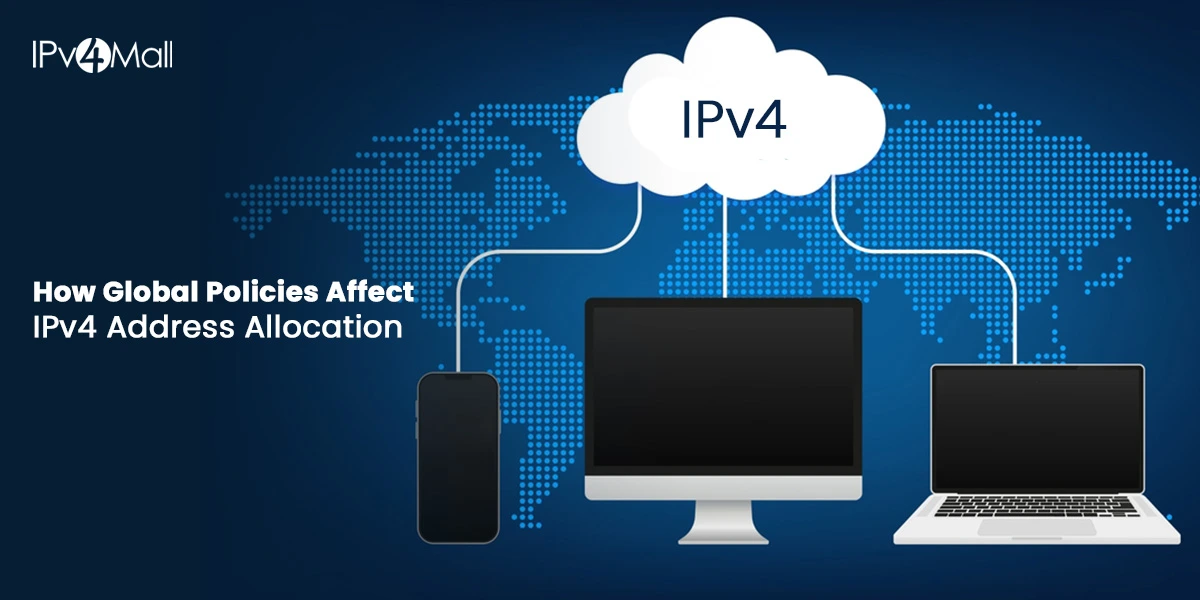
How Global Policies Affect IPv4 Address Allocation
Many moons ago, humanity invented the Internet as a way of communication. It was revolutionary—building an interconnected network that would forever change how we share information, conduct business, and build relationships across the globe. As it continued to grow and glow with thousands of millions of devices connected to it, we found ourselves in a bit of a situation: we’ve exhausted the system of unique numerical addresses known as IPv4 addresses that connect devices to the internet. This situation has led policymakers and network administrators to implement various strategies to efficiently manage and allocate IPv4 addresses. In this article, we discuss how global policies influence IPv4 address allocation, the challenges these policies address, and the future of IP address management.[…]
September 8, 2024
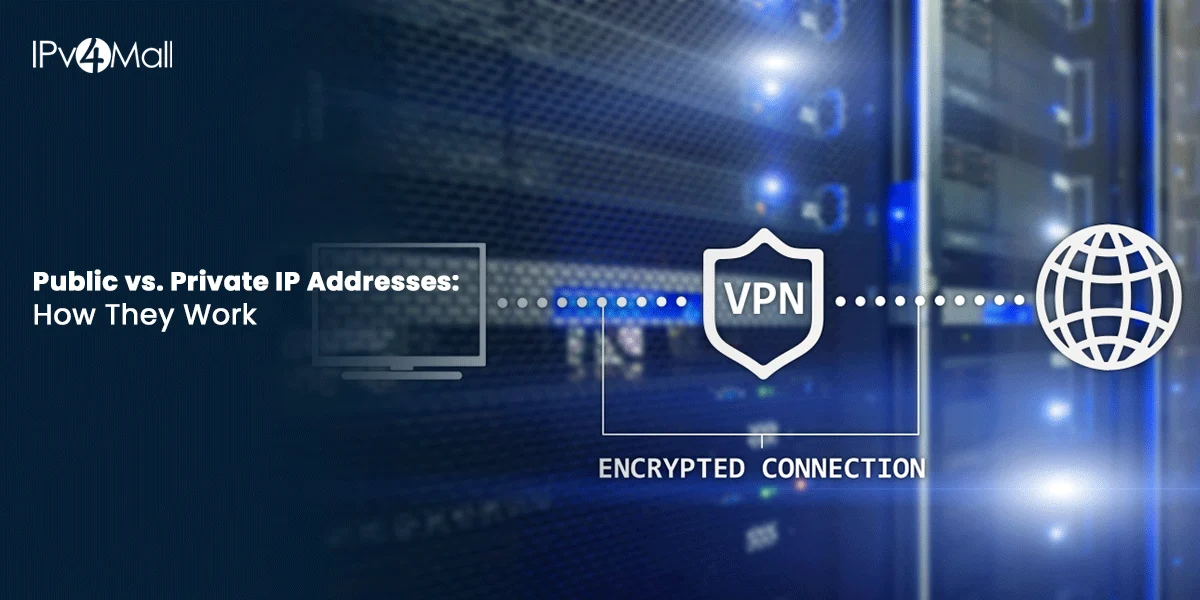
Public vs. Private IP Addresses: How They Work
The internet operates on a vast network of devices, each with its unique identifier, known as an IP address. IP addresses are the foundation of how data is sent and received over the internet. Understanding the difference between public and private IP addresses is crucial for businesses, developers, and everyday users. This article will explore what public and private IP addresses are, how they function, and why knowing the difference matters. What is an IP Address? An IP (Internet Protocol) address is a unique string of numbers assigned to every device connected to a network. This address acts like a digital fingerprint, allowing devices to communicate and share information over the internet or a local network. IP addresses can be[…]
September 5, 2024
IPv4 vs IPv6: Differences and Challenges
In this modern age of technology and AI, the internet is used in pretty much everything, and the devices connected online are increasing dramatically. Each and every one of these devices needs a unique address to communicate with other devices. These addresses are called IP (Internet Protocol) addresses, and they are of two types so far: IPv4 and IPv6. This comprehensive article explores IPv4 vs IPv6 and the key differences between them. Let’s get right into it! What is IPv4 and IPv6? IPv4 IPv4 is the original addressing system introduced in the 1980s. It uses a 32-bit address scheme, which allows for approximately 4.3 billion unique addresses. You’d think 4.3 billion unique addresses is a lot—infinite even. However, over the[…]
August 28, 2024
Unlock Flexibility with Cloud-Based IP Address Management
It’s how the world works: the more it evolves, the more complex it gets, and the more we come up with solutions to make things simpler—it’s a loop. One of the things that got more complex over time is IP address management, and traditional IPAM solutions just don’t work anymore. But then, cloud-based IP address management solutions made a grand entrance, and we’re here to tell you why you should consider it. In this guide, we take you on a “cloud” journey and explore how cloud-based IPAM can transform your network management strategy. Interest piqued? Keep reading! IP Addresses 101: What’s IP Address Management (IPAM)? IP Address Management is the planning, tracking, and management approach toward spaces of IP addresses[…]
August 26, 2024
Innovative Solutions to Overcome IPv4 Address Exhaustion
Sorry to be the bearer of bad news, but we’re running out of IPv4 addresses—once thought to be unthinkable, has now become a reality. The tremendous growth of the Internet, mobile devices, and the rise of the Internet have exhausted the pool of some 4.3 billion IPv4 addresses. But, as always, in the history of the human race, we never run out of solutions; we either find them or create them. This blog post explores all the innovative IPv4 address exhaustion solutions we’ve come up with so far. So, shall we? Innovative Solutions to the Rescue So, how do we get out of this tight spot we found ourselves in? Here are the top IPv4 address exhaustion solutions: Transitioning to[…]
January 2, 2024
To Lease or Buy IP Address: Decoding the Digital Dilemma
Navigating the digital landscape is like riding a rollercoaster—fast-paced and unpredictable. In this thrilling world, the question of whether to lease or buy an IP address becomes a crucial decision. It’s not just a choice; it’s a strategic move that could shape the destiny of your online presence. The Basics: What’s an IP Address, Anyway? An IP address, short for Internet Protocol address, is the digital tag your device wears in cyberspace. It’s like your home address but for the virtual realm. This numerical label, separated by dots, enables computers to find and communicate with each other. Among the types of IP addresses, IPv4 remains the most widely used despite the introduction of IPv6. However, businesses and individuals face a[…]
November 8, 2023
Mastering Autoconfiguration IPv4 Address Simplified
In today’s fast-paced and interconnected world, the importance of understanding IPv4 address autoconfiguration cannot be overstated. Whether you are an IT professional, a network administrator, or just a curious tech enthusiast, delving into the intricacies of IPv4 address assignment is a valuable pursuit. In this comprehensive guide, we will explore the intricacies of IPv4 address autoconfiguration, providing you with the knowledge you need to master this critical aspect of networking. The Significance of IPv4 Address Autoconfiguration IPv4, or Internet Protocol version 4, has been the backbone of the Internet for decades. Every device connected to the Internet requires a unique IP address to communicate effectively. In the early days of networking, these addresses were assigned manually, a cumbersome and error-prone[…]
October 30, 2023
Exploring IP Addresses: Why Are They Divided into Four Parts?
In the world of networking and the Internet, you’ve likely encountered IP addresses—those seemingly random combinations of numbers. But have you ever wondered why they are divided into four parts, like 192.168.1.1? In this comprehensive article, we’ll dive deep into the structure and significance of IP addresses, shedding light on the reasons behind this division. By the end, you’ll have a thorough understanding of this fundamental aspect of computer networks. The Basics of IP Addresses Before we delve into why IP address parts are four, let’s start with the basics. An IP address, short for Internet Protocol address, is a numerical label assigned to each device connected to a computer network that uses the Internet Protocol for communication. These addresses[…]
Recent News

Blockchain Technology: Revolutionizing IP Management
October 30, 2024

Understanding IPv4Mall’s Trusted Partnerships
October 26, 2024


Recent Comments